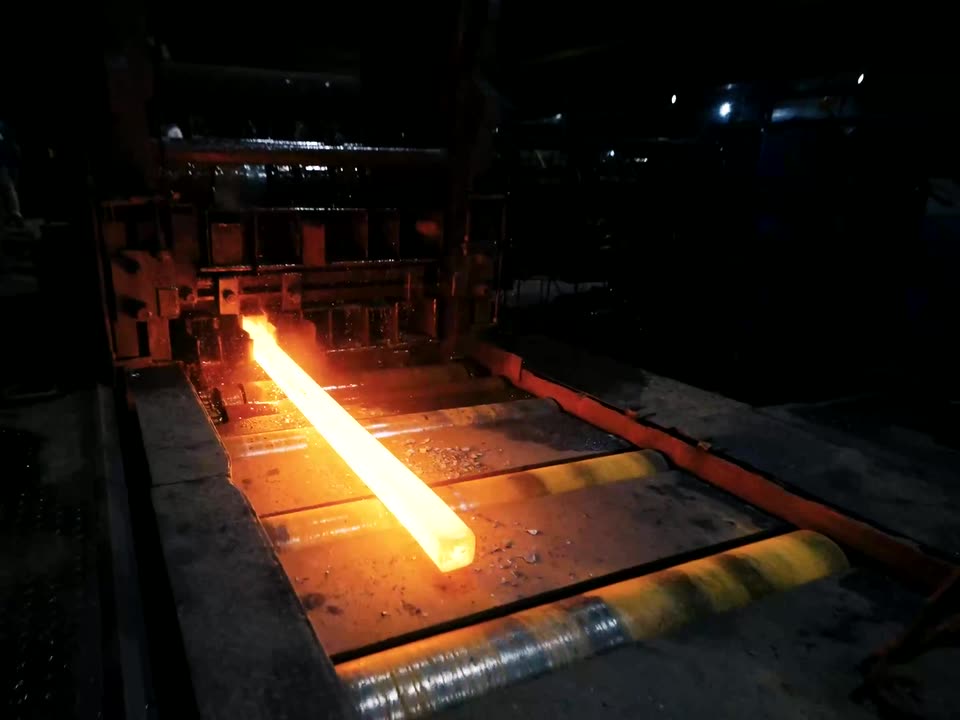
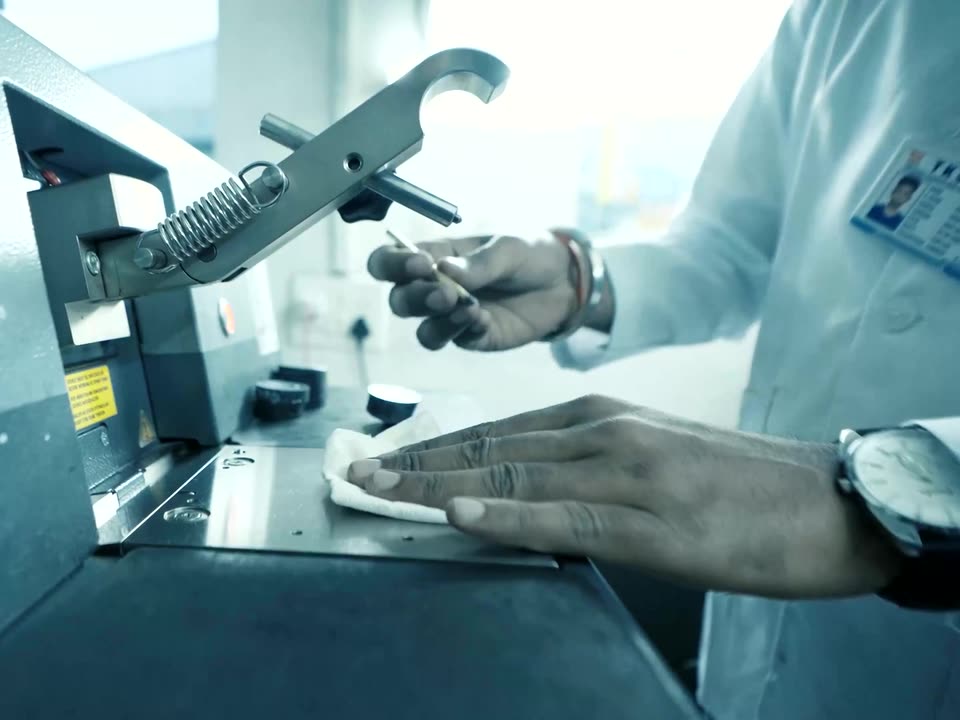
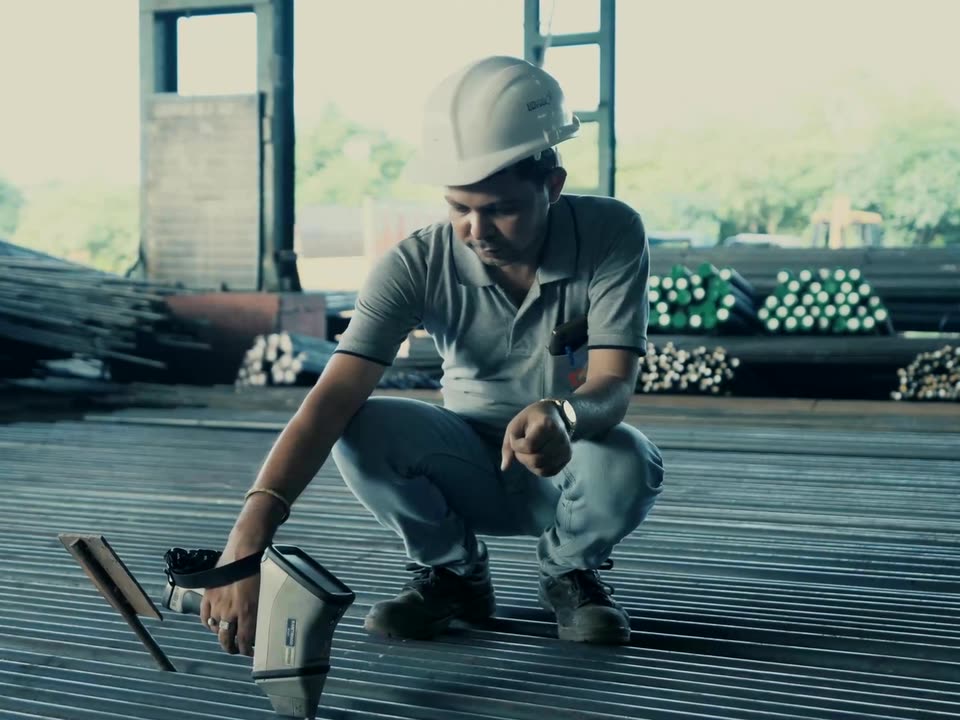
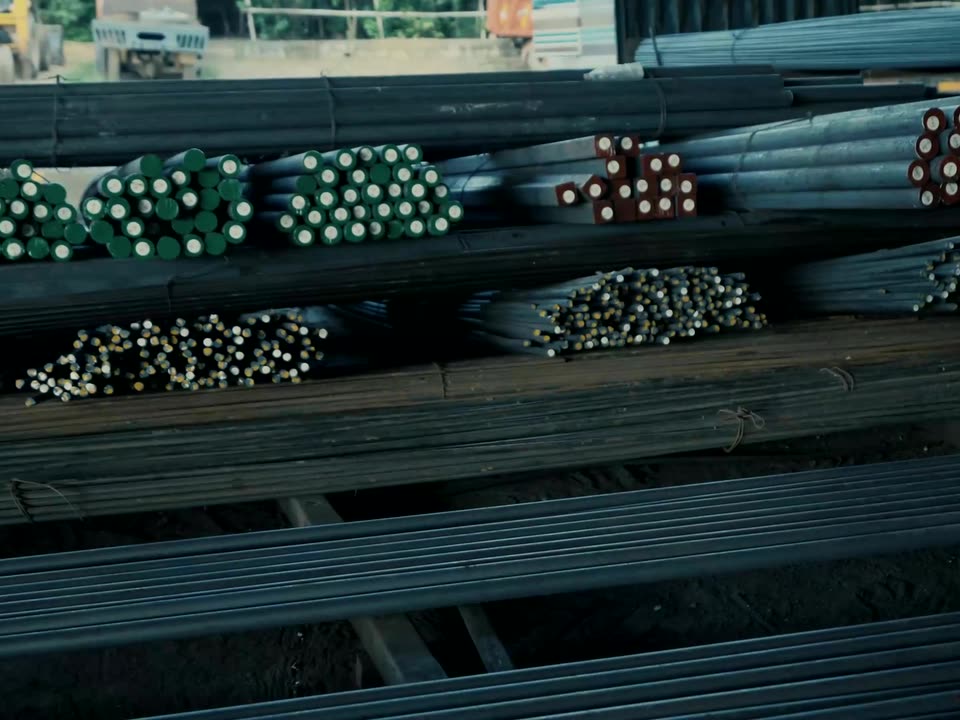
SAE 1010, also known as AISI 1010 or UNS G10100, is a low-carbon plain carbon steel with a nominal carbon content of 0.10%. It belongs to the mild steel family and is widely valued for its excellent ductility, weldability, and ease of cold forming. TK Steels supplies SAE 1010 in hot-rolled condition for a wide range of structural, industrial, and engineering applications across India and globally.
| Property | Value | Unit |
| Tensile Strength | 350–400 | MPa |
| Yield Strength | 190–330 | MPa |
| Elongation | 22–31 | % |
| Brinell Hardness | 120–140 | BHN |
| Carbon Content | 0.08–0.13 | % |
| Supplied Condition | Hot Rolled | - |
SAE 1010 is a non-alloy, plain carbon steel classified under the AISI/SAE carbon steel designation system. The first two digits “10” indicate that it is a plain carbon steel, while the last two digits indicate a nominal carbon content of approximately 0.10%. Its UNS designation is G10100.
Due to its low carbon content, SAE 1010 has a predominantly ferritic microstructure with a small fraction of pearlite. This gives the steel its characteristic softness, excellent cold formability, and superior weldability compared to higher-carbon grades. It is preferred for forming, bending, deep drawing, stamping, and general fabrication applications.
It is also referred to as AISI 1010 steel, C10 steel, or mild steel Grade 1010 in different regional standards. In European standards, its nearest equivalents include DC01 (EN 1.0330) and DIN 1.0337.
Hot Rolled (HR), as-rolled, normalized, or annealed on request.
Plates, sheets, coils, strips, pipes, tubes, round bars.
ASTM A1011 for hot-rolled sheet and coil, ASTM A1008 for cold-rolled steel, ASTM A29 for bars, and ASTM A519 for tubes.
• Oil and Gas Pipeline
• Chemical Industry
• Plumbing
• Heating Systems
• Water Supply Systems
• Paper & Pulp Industry
• Power Plant
• Fabrication Industry
• Food Processing Industry
• Structural Pipes & Tubes
• Heat Exchangers
• Automotive Parts & Panels
• Sheet Metal Enclosures
• Fasteners & Bolts
• General Engineering Applications
• Stamping, forming, bending, and deep drawing applications
| Element | Symbol | Min % | Max % |
| Carbon | C | 0.08 | 0.13 |
| Manganese | Mn | 0.30 | 0.60 |
| Silicon | Si | 0.05 | 0.35 |
| Sulphur | S | - | 0.035 max |
| Phosphorus | P | - | 0.035 max |
Carbon is the primary element controlling strength and hardness. Manganese acts as a deoxidizer and improves strength. Silicon contributes to deoxidation and moderate strengthening. Sulphur and phosphorus are controlled at low levels to support ductility and toughness.
| Property | Hot Rolled Condition | Annealed Condition | Unit |
| Tensile Strength | 350–400 | 310–430 | MPa |
| Yield Strength | 190–330 | 172–315 | MPa |
| Elongation at Break | 22–31 | 29–45 | % |
| Hardness | 120–140 | 88–128 | BHN / HV |
| Modulus of Elasticity | 200 | GPa | |
| Density | 7.87 | g/cm³ | |
| Poisson's Ratio | 0.29 | - | |
Note: Values are indicative for standard product forms. Actual properties may vary depending on product form, manufacturing process, and heat treatment condition.
| Property | Value | Unit |
| Density | 7.87 | g/cm³ |
| Melting Point | 1425–1475 | °C |
| Modulus of Elasticity | 200 | GPa |
| Thermal Conductivity | 51.9 | W/m·K |
| Specific Heat Capacity | 486 | J/kg·K |
| Thermal Expansion Coefficient | 11.7 × 10⁻⁶ | /°C |
| Electrical Resistivity | 0.17 × 10⁻⁶ | Ω·m |
| Standard | Equivalent Grade / Designation |
| USA | AISI 1010 / SAE 1010 / UNS G10100 |
| Europe / DIN | DC01 (EN 1.0330), DIN 1.0337, DIN 1.1121 |
| Japan / JIS | S9CK, S10C, S12C |
| France / AFNOR | XC 10 |
| ASTM | A29, A108, A510, A512, A513, A519, A545, A575, A576, A830 |
| AMS | AMS 5040, 5042, 5044, 5047, 5050, 5053, 5055 |
| MIL | MIL-S-11310 (CS 1010) |
Full Annealing: SAE 1010 can be fully annealed at 871–982°C, followed by slow furnace cooling. The annealed tensile strength is approximately 310 MPa.
Stress Relief Annealing: Stress relief can be performed at approximately 538°C, followed by gradual cooling, to reduce residual stresses without major microstructural change.
Case Hardening: Because SAE 1010 has very low carbon content, conventional through-hardening by quenching and tempering is not highly effective. However, it can be case hardened or carburized to create a hard, wear-resistant surface while maintaining a ductile core.
| Property | SAE 1010 | SAE 1018 |
| Carbon Content | 0.08–0.13% | 0.15–0.20% |
| Tensile Strength | 350–400 MPa | 430–480 MPa |
| Yield Strength | 190–330 MPa | 240–400 MPa |
| Elongation | 22–31% | 17–27% |
| Formability | Excellent | Good |
| Machinability | Good | Better |
| Best For | Stamping, forming, bending | Machined parts, shafts, pins |
SAE 1010 is considered highly weldable because of its low carbon content. It can be joined using standard welding processes such as MIG, TIG, stick welding, and resistance welding without preheating or post-weld heat treatment in most standard applications.
In terms of formability, SAE 1010 performs better than many higher-carbon grades. Its ferritic microstructure allows severe cold forming, deep drawing, roll forming, and bending with minimal springback and low risk of cracking.
What is SAE 1010 carbon steel?
SAE 1010 is a low-carbon plain carbon steel with 0.08–0.13% carbon content. It is known for excellent ductility, weldability, and easy formability.
What is the tensile strength of SAE 1010 steel?
SAE 1010 carbon steel has a tensile strength of approximately 350–400 MPa in the hot-rolled condition.
Can SAE 1010 steel be welded?
Yes, SAE 1010 is highly weldable and can be welded using common welding methods.
Can SAE 1010 steel be hardened?
SAE 1010 cannot be significantly through-hardened due to its low carbon content, but it can be case hardened through carburizing.
Is SAE 1010 the same as AISI 1010?
Yes, SAE 1010 and AISI 1010 refer to the same steel grade. Its UNS designation is G10100.
TK Steels supplies SAE 1010 / AISI 1010 carbon steel with material test certificates, competitive pricing, and fast delivery across India. Available in plates, sheets, pipes, bars, tubes, coils, and other required forms.
Manufactured at TK Steels Group's 3 integrated plants across 30 acres in Ludhiana, Punjab.
Request a Quote Contact UsReal photographs from TK Steels and Prime Steel Processors. See our infrastructure

TK Steels Group: TK Steels (Units I and II) and Prime Steel Processors. Carbon and alloy steel rounds, hex bars, round cornered squares, ingots and billets, and wire rods from three plants in Ludhiana, since 1978.
Unit I: D-11, Phase V, Focal Point, Ludhiana, Punjab 141010.
Unit II: Village Paharuwal, Tehsil Koom Kalan, Ludhiana, Punjab 141112.
Chandigarh Road, V.P.O Jandiali, Budhewal, Ludhiana, Punjab 141112.
+91 97814 06127 | info@primesteels.in
+91-97814-06106/107/108
info@tksteels.com
© 2026 TK Steels. All Rights Reserved.


 Market Watch