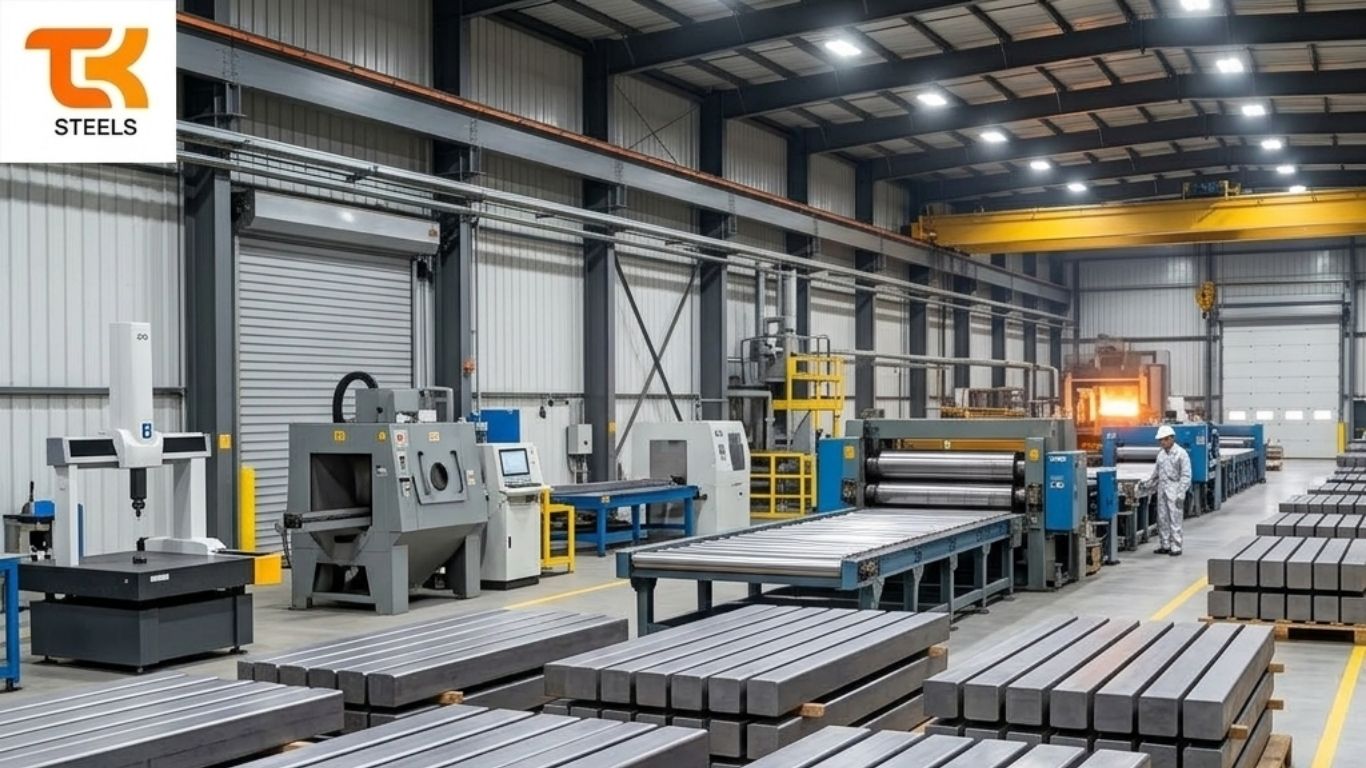
In the steel and metal manufacturing industry, understanding the difference between ingots and billets is crucial for selecting the right raw materials for production. Steel ingots and metal billets are two primary intermediate products used in manufacturing finished steel goods, but they differ in size, production process and applications.
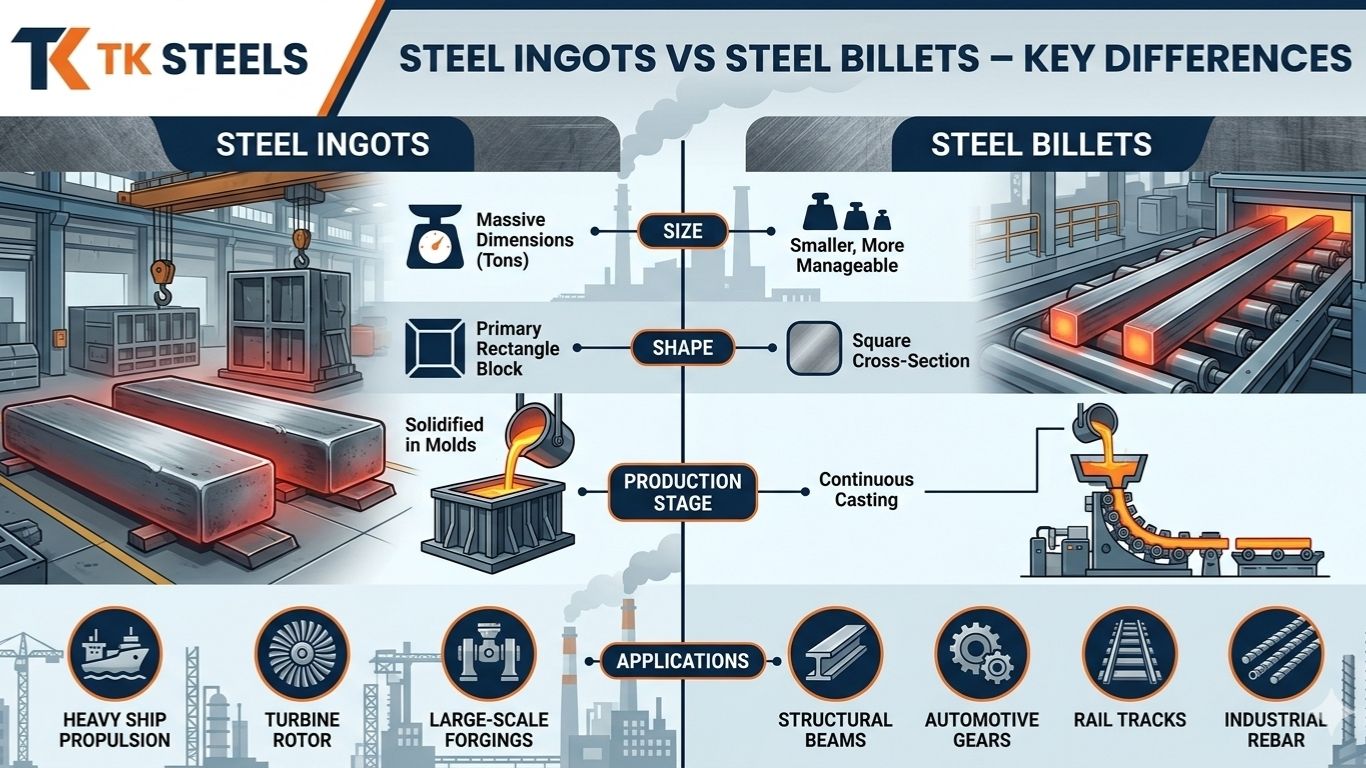
A steel ingot is the first solid form of metal produced after melting raw steel in a furnace. Ingots are typically large blocks of steel and serve as the raw material for further processing.
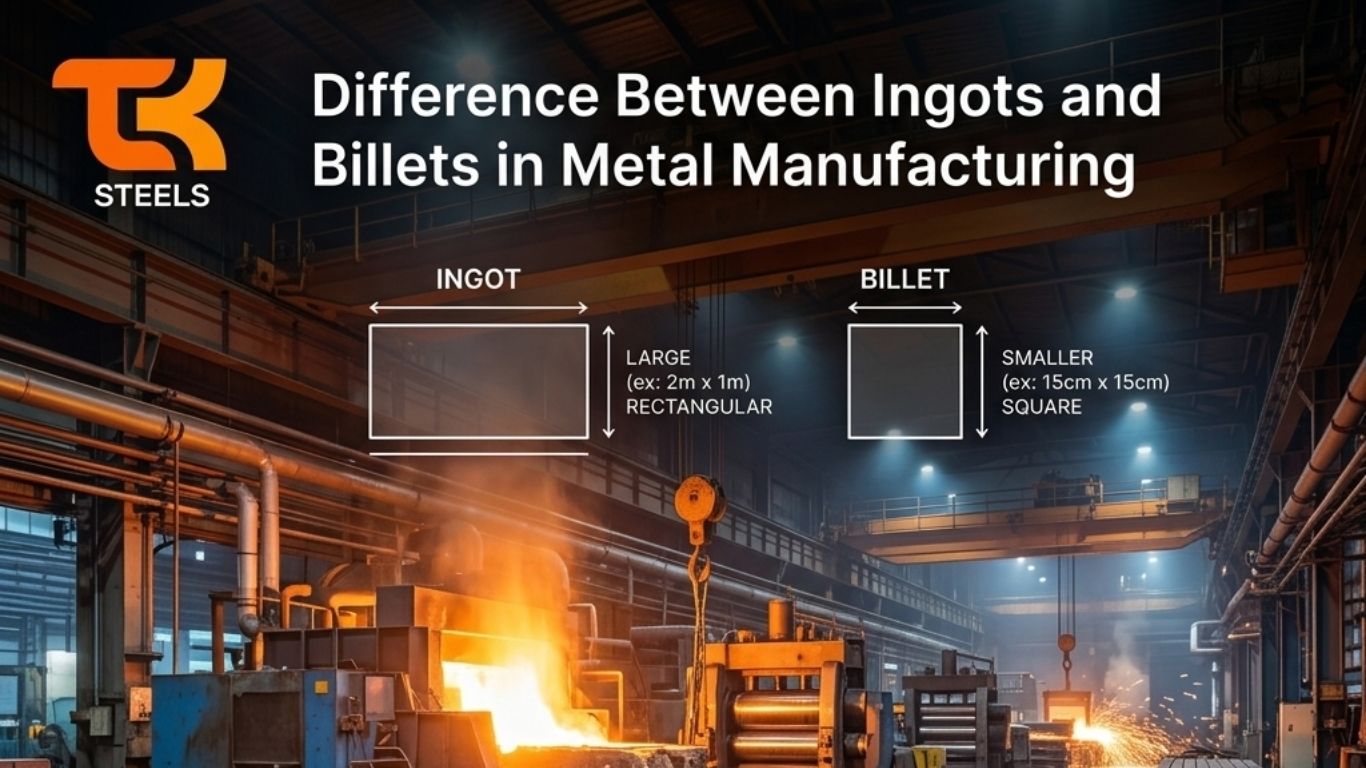
A steel billet is a smaller, refined form of metal that is easier to process than an ingot. Billets are produced from rolled ingots or continuous casting and are widely used to manufacture steel rods, bars, wires and structural components.
| Feature | Steel Ingots | Steel Billets |
|---|---|---|
| Production Stage | First solid form after smelting | Produced from ingots or continuous casting |
| Size | Large blocks | Smaller pieces |
| Shape | Rectangular or trapezoidal | Square or round |
| Processing | Needs further rolling | Ready for shaping |
| Applications | Raw material | Rods, bars, structures |
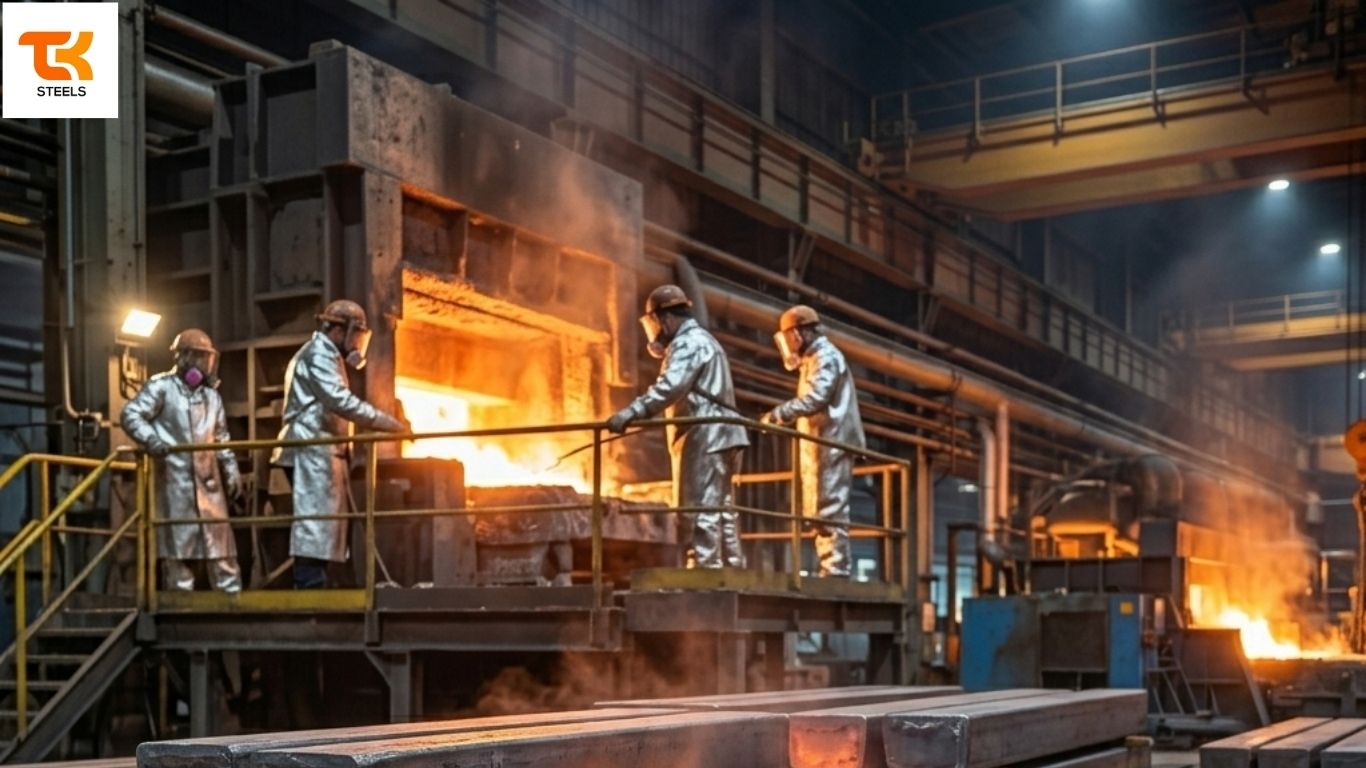
Billets are preferred in modern steel production because they allow manufacturers to produce high-quality steel products consistently and cost-effectively.
TK Steels is a leading alloy steel manufacturer in India, offering high-quality steel ingots and billets suitable for diverse industrial applications. With advanced manufacturing processes and strict quality control, TK Steels ensures durable, strong and reliable steel products for all your production needs.
Learn more: https://tksteels.com/
Understanding the difference between ingots and billets helps industries select the right steel form for manufacturing processes. Ingots are large, initial forms of steel, while billets are refined, ready-to-use forms suitable for rods, bars, and structural components. With the growing demand for high-quality steel products, manufacturers increasingly prefer billets for efficiency, quality, and versatility.

Spread over 2 verticals, the group produces economical and class-leading mild, alloy and carbon steel, hex, round, square, wire rods, ingots and billets with the most modern integrated steel manufacturing facility.
D-11, Phase V, Focal Point, Ludhiana, Punjab.
Paharuwal Road, Near Kohara, Vill. Jandiali, Ludhiana, Punjab.
+91-97814-06106/107/108
info@tksteels.com
© 2022 TK Steels. All Rights Reserved.
 Market Trends
